前言
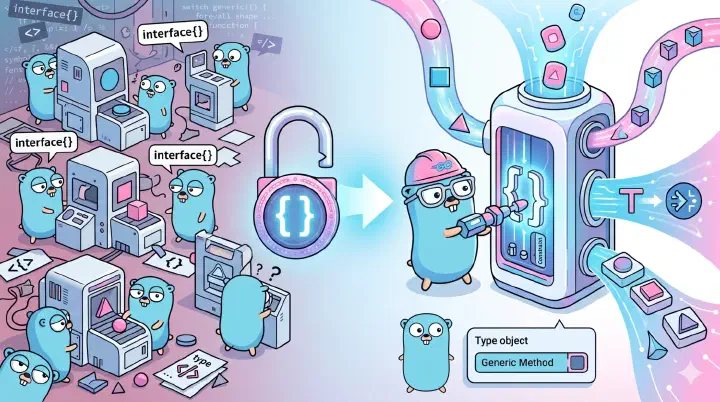
Go 1.18 帶來泛型之後,我們終於可以寫出型別安全的通用函式,不再需要到處 interface{} 加型別斷言。但一個眾所周知的限制一直存在到現在,method 沒辦法有自己的 type parameter。
換句話說,這段程式碼在目前的 Go 版本中是非法的:
func (c *Client) doRequest[T any](ctx context.Context, method, path string, body any) (*T, error) {
    // 編譯錯誤:cannot use generic method doRequest without instantiation
}
為了繞過這個限制,大家只能退而求其次,把 receiver 當作普通參數傳進去,改用 package-level 的 generic function。
最近 Go issue #77273 的進展讓這件事有了轉機,generic method 的設計已被接受,預計在 Go 1.27 正式釋出。
為什麼現在沒有 Generic Method?
這不是 Go team 沒想到,而是刻意的設計決策。
Go 的 interface 是核心功能,method 必須能夠被 dispatch 到具體的實作上。如果 method 自身帶有 type parameter,編譯器在 dispatch 時需要知道 T 是什麼,這在動態 dispatch(interface dispatch)的情境下是個難題,runtime 無法事先知道要生成哪個型別的實例化版本。
所以泛型剛推出時,generic method 被刻意排除在外,等待一個比較完整的設計方案。這個等待從 Go 1.18 一路等到了 1.27(暫定)。
現實中的痛點:以 HTTP Client 為例
我們的 API client 需要處理不同 response 結構,所有 endpoint 共用同一個 Response[T] wrapper:
type Response[T any] struct {
    Data  T      `json:"data,omitzero"`
    Error string `json:"error,omitzero"`
}
理想的寫法是讓 *Client 直接持有 generic method:
func (c *Client) doRequest[T any](ctx context.Context, method, path string, body any) (*T, error) {
    var response Response[T]
    err := c.doRequestWithQuery[T](ctx, method, path, nil, body)
    // ...
    return &response.Data, nil
}
但這在現在的 Go 裡行不通。於是現實的 code 長這樣,分成兩層:
// 第一層:package-level generic function,把 client 當參數傳進來
func doRequest[T any](ctx context.Context, client *Client, method, path string, body any) (*T, error) {
    var response Response[T]
    err := client.doRequest(ctx, method, path, body, &response)
    if err != nil {
        return nil, err
    }
    return &response.Data, nil
}

func doRequestWithQuery[T any](ctx context.Context, client *Client, method, path string, query url.Values, body any) (*T, error) {
    var response Response[T]
    err := client.doRequestWithQuery(ctx, method, path, query, body, &response)
    if err != nil {
        return nil, err
    }
    return &response.Data, nil
}

// 第二層:真正的 method,但沒有 type parameter,只能接受 any
func (c *Client) doRequest(ctx context.Context, method, path string, body any, result any) error {
    return c.doRequestWithQuery(ctx, method, path, nil, body, result)
}
一層負責型別安全的反序列化(package-level generic),一層負責實際的 HTTP 請求(non-generic method)。每次新增 endpoint,caller 得這樣呼叫:
func (a *APIClient) GetResourceA(ctx context.Context, req RequestGetResourceA) (*ResponseGetResourceA, error) {
    path := fmt.Sprintf("/api/v1/a/%s", req.ID)
    response, err := doRequest[responseGetResourceA](ctx, a.client, http.MethodGet, path, body)
    // ...
}
第一眼看到這段的人通常都會問:「為什麼 doRequest 是一個吃 client 的獨立函式,不是 client 的 method?」這就是 generic method 缺失帶來的認知成本,你需要額外解釋一個不自然的設計決策。
此外,因為 package-level 的 doRequest 和 method (c *Client) doRequest 名稱相同,只靠大小寫和呼叫方式來區分,閱讀時容易混淆,命名上也很容易撞牆。
Generic Method 到來之後
有了 generic method,兩層結構可以合併,讓 *Client 直接持有 generic method:
func (c *Client) doRequest[T any](ctx context.Context, method, path string, body any) (*T, error) {
    var response Response[T]
    err := c.doRequestWithQuery(ctx, method, path, nil, body, &response)
    if err != nil {
        return nil, err
    }
    return &response.Data, nil
}

func (c *Client) doRequestWithQuery[T any](ctx context.Context, method, path string, query url.Values, body any) (*T, error) {
    var response Response[T]
    err := c.doRequestRaw(ctx, method, path, query, body, &response)
    if err != nil {
        return nil, err
    }
    return &response.Data, nil
}
caller 的寫法從「傳 client 進去的函式」變成「呼叫 client 的 method」:
// before: package-level function,client 當參數
response, err := doRequest[responseGetResourceA](ctx, a.client, http.MethodGet, path, body)

// after: method call
response, err := a.client.doRequest[responseGetResourceA](ctx, http.MethodGet, path, body)
差別看起來小,但對 API 設計的影響不小。
一、可見性更清晰。doRequest 現在是 *Client 的 method,IDE 的 autocomplete 會列出它,不再需要記住有哪些 package-level helper 函式。
二、封裝更乾淨。之前 package-level doRequest 和 method doRequest 同名但型態不同,現在都是 method,命名空間清楚多了,也不會再有「等等,這個 doRequest 是 function 還是 method?」的困惑。
三、更符合 Go 的慣用法。Go 鼓勵把行為綁定在型別上,generic method 讓這個原則在泛型場景下也能成立,不再需要因為語言限制而繞道而行。
多型的角度:Generic Method 的潛力與邊界
有人可能會問,generic method 可以放進 interface 嗎?這樣就能對不同的 client 實作進行多型了?
答案是:有但有邊界。
Go 的 interface 以 runtime dynamic dispatch 為核心設計,如果 interface 裡有 generic method,runtime 無法事先知道該 dispatch 到哪個具體的型別實例化版本。所以帶有 generic method 的型別,無法直接用來滿足帶有同名 generic method 的「普通 interface 變數」。
如果你需要對 HTTP client 進行多型(例如區分 real client 和 mock),目前比較實際的做法還是讓 interface 維持 non-generic:
// interface 仍然使用 any,不帶 type parameter
type Requester interface {
    doRequestRaw(ctx context.Context, method, path string, query url.Values, body any, result any) error
}
generic method 的多型價值更多展現在「type constraint」的層面。在 generic function 裡,可以透過 constraint 聲明「我需要一個支援某個 generic method 的型別」:
type CanRequest[T any] interface {
    DoRequest[T](ctx context.Context, method, path string, body any) (*T, error)
}

func fetchAll[C CanRequest[T], T any](ctx context.Context, client C, paths []string) ([]*T, error) {
    results := make([]*T, 0, len(paths))
    for _, p := range paths {
        r, err := client.DoRequest[T](ctx, http.MethodGet, p, nil)
        if err != nil {
            return nil, err
        }
        results = append(results, r)
    }
    return results, nil
}
這讓 library 作者在設計通用工具函式時,能以更精確的 constraint 描述所需的能力,而不是傳一個吃 any 的函式指標進去。
目前的限制
Generic method 雖然呼之欲出,但還是有幾點值得注意。
Generic method 無法用於 interface 的 dynamic dispatch,這是架構性限制,不是 bug。如果你的設計高度依賴 interface abstraction 來做 dependency injection(例如在測試中替換 client),generic method 只是讓實作層更乾淨,interface 層還是得維持原本的 non-generic 設計。
另外,預計在 Go 1.27 釋出,但在正式 release 之前細節可能還會有調整,不建議現在就把生產代碼的設計押注在特定語法上。等 RC 出來再說。
寫在最後
Generic method 是 Go 泛型拼圖中一直缺席的一塊。它不會從根本上改變我們寫 Go 的方式,但會把那些現在感覺「明明應該這樣寫但寫不了」的 workaround 清掉,讓 API 設計更直覺,少解釋一些「為什麼這裡要這樣繞」的歷史包袱。
以前跟同事解釋「為什麼 doRequest 是一個吃 client 的函式而不是 client 的 method」這件事,希望從 Go 1.27 開始可以從解釋名單上劃掉。
關於「dynamic dispatch」這個術語,是物件導向程式語言中普遍存在的概念,簡單說就是「在 runtime 才決定要呼叫哪個函式的機制」。
在 Go 裡,interface 的方法呼叫就是 dynamic dispatch。當你透過 io.Reader 呼叫 Read 時,Go runtime 在執行期查找該變數底層的實際型別,再找到對應的 Read 實作來執行,這個查找是有成本的(通常透過 itab 指標)。
對應地,generic function 使用的是「static dispatch」,也叫 monomorphization:編譯器在編譯時根據每個具體的型別參數,各自生成獨立的程式碼,執行時不需要查找,效能更好,代價是二進制大小可能增加。
Rust 的 dyn Trait 對應 dynamic dispatch,impl Trait / T: Trait 對應 static dispatch,概念和 Go 一樣,只是語法不同。Go 的泛型走的就是 static dispatch 那條路,所以 generic method 的限制(無法用於 interface dynamic dispatch)也就不難理解了。